Ciao! As you may have heard my study abroad program in Italy has been cancelled, but we are still continuing our classes. Before we left we did an olive oil tasting, we tried three different oils at three different price points to see the differences in flavor and aromas. We tried the oils on their own and then we had some food that was prepared with the different oils to see if we could taste a difference.
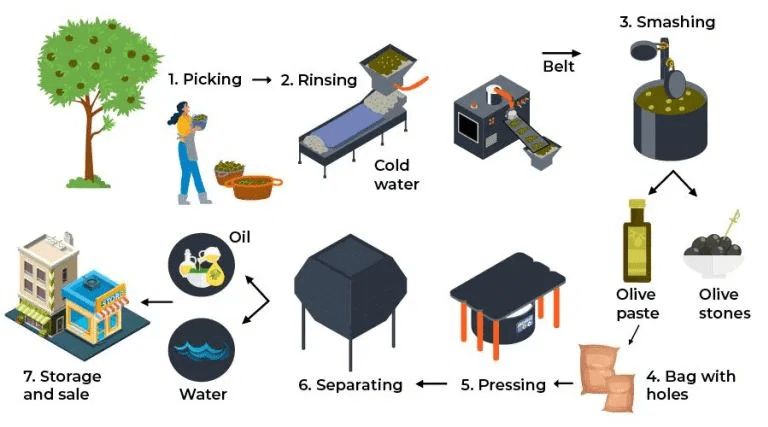
To do the tasting we first would smell the oil and try to describe what the aroma was. Next, we would warm the oil in our hands by rubbing the cup it was in. Doing this would intensify the aroma of the oil making it clearer what the taste was going to be like. Finally, to taste we would pour a little bit into our mouths. The proper method of trying the oil is to slurp the oil noisily, as drawing in air heightens the flavor of the oil. After, we would all discuss what we thought of it and we would try to identify the different qualities in the oil. Between trying different oils you should cleanse your palette, at our tasting we used apple slices, you can also use bread. Professionals will present the oil in blue colored glasses, the color of the oil does not affect the taste at all. Presenting them in a colored glass eliminates the possibility of unintentionally judging the oil based on the color. Here is a link to an article describing the process of making olive oil, the article is pretty detailed. We got the general idea of making olive oil but we were supposed to go to an olive orchard to get a better idea and see it in action. Below is a basic diagram of the production of olive oil.
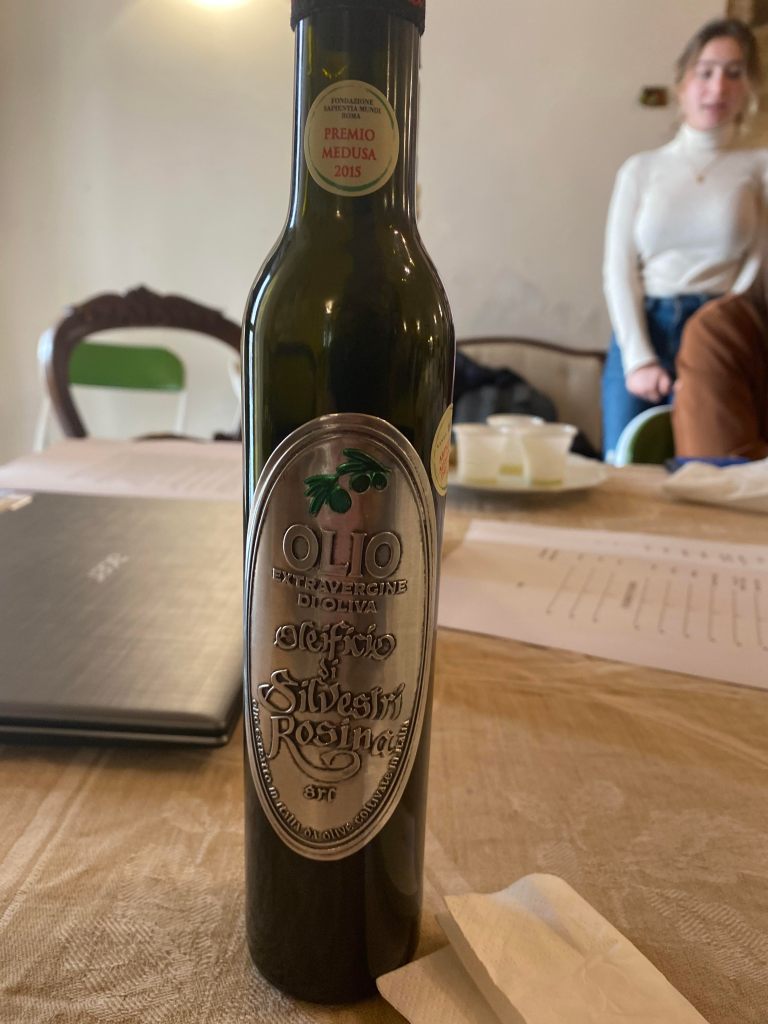
The first oil was Oleificio Silvestri Rosina. This oil was the most expensive one we tried with the price point being 9 euros for a 1/4 liter. The oil had a strong tomato and grass smell, as for the taste we described it as fruity and bitter. The second oil we tried was Olio Monovarietale di Frantoio. This was the middle range of the three that we tried and cost 10 euros for a 1/2 liter. This oil had a sweet taste of almond and had both bitter and pungent qualities which were positive attributes. The last oil we tried was the worst one. This oil was from Frantoio La Rocca and was 3.99 euros for a full liter (we had this oil in our kitchen due to the price.) This oil was a blend and would use olives that were either ripe or not it didn’t really matter. Due to this, it had a fusty, musty, and sour smell and taste to it. This was the worst one in my opinion and really had nothing positive about it. When we warmed it before trying it we could already tell it was not going to be great based on the smell.
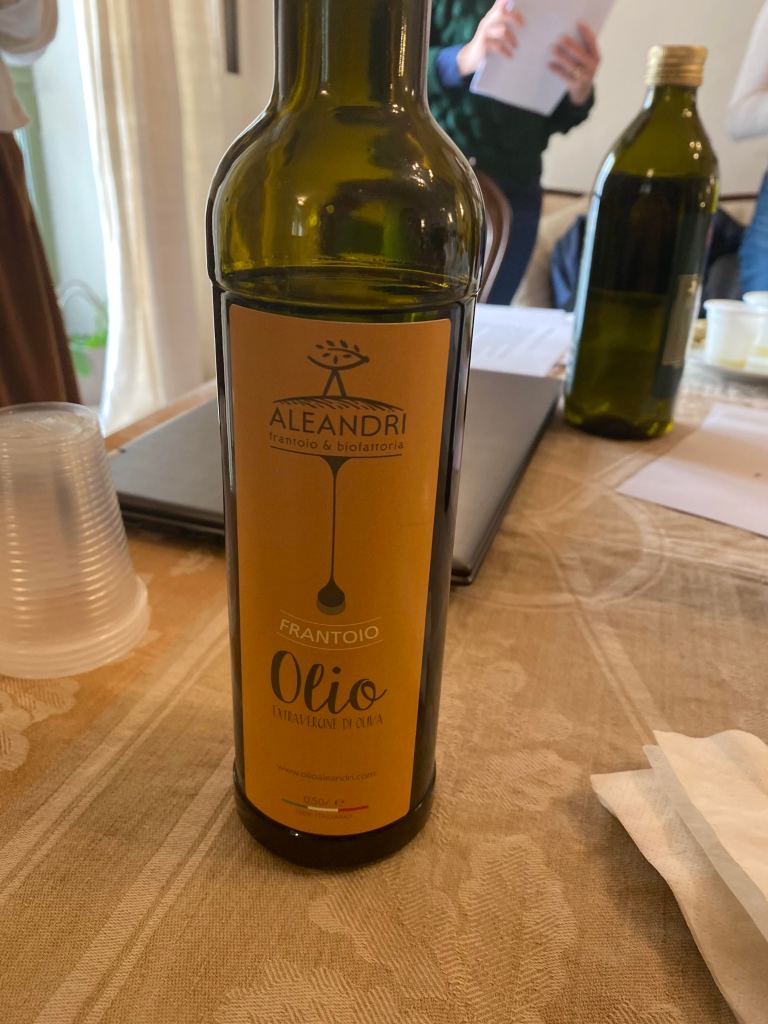
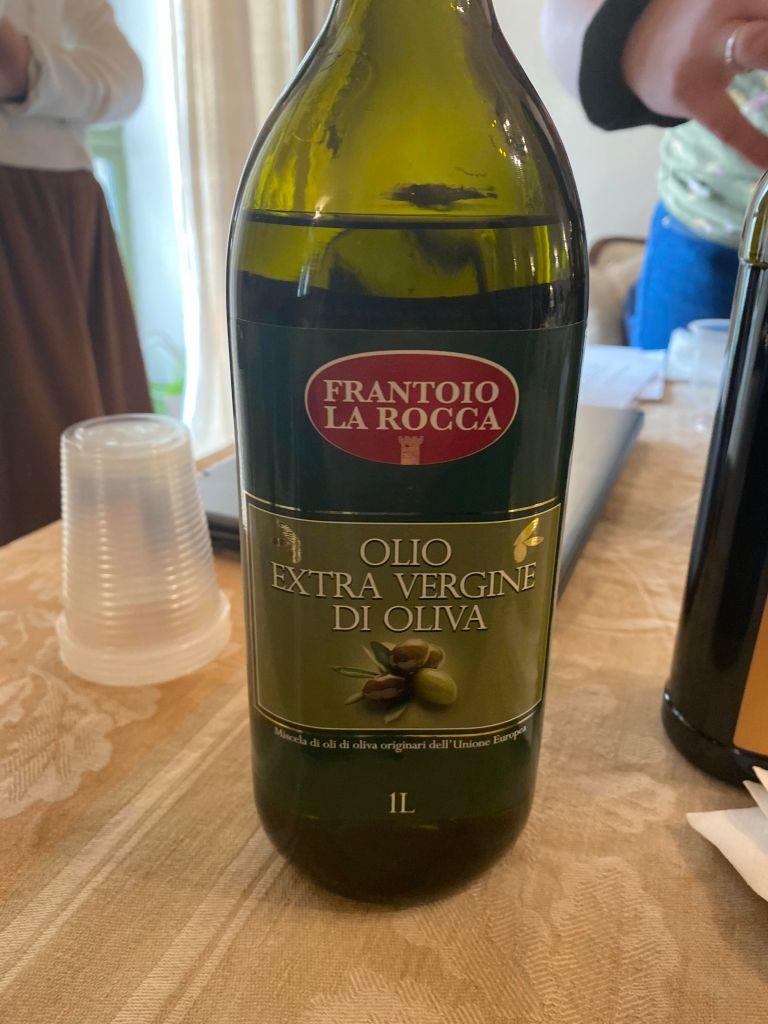
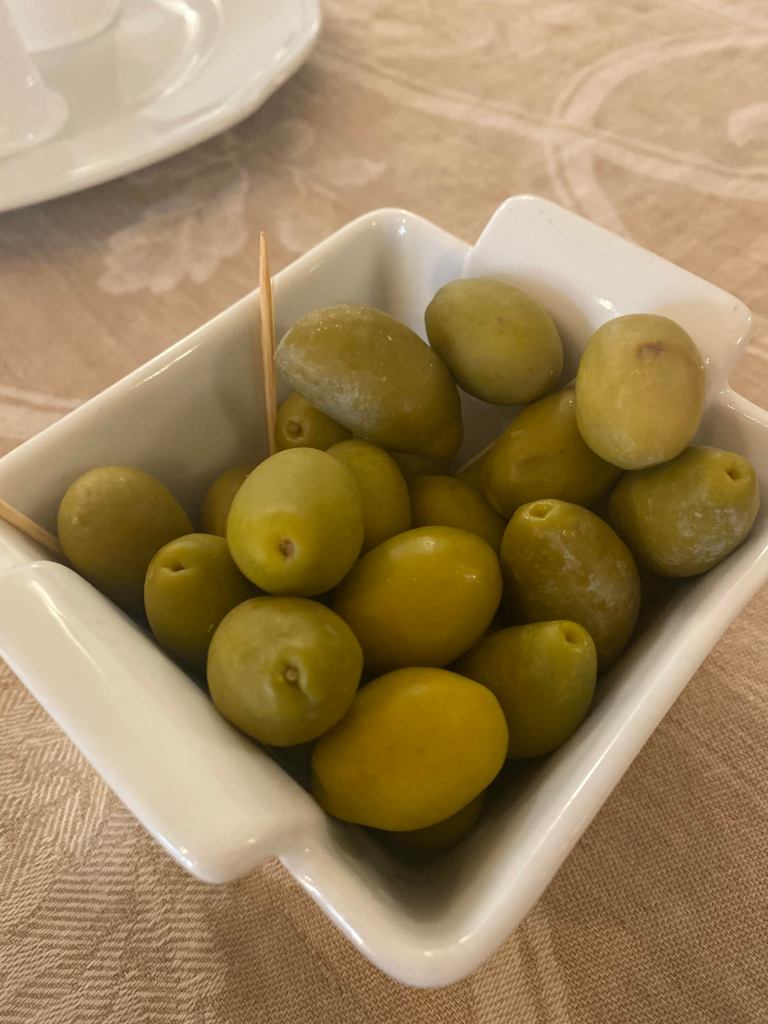
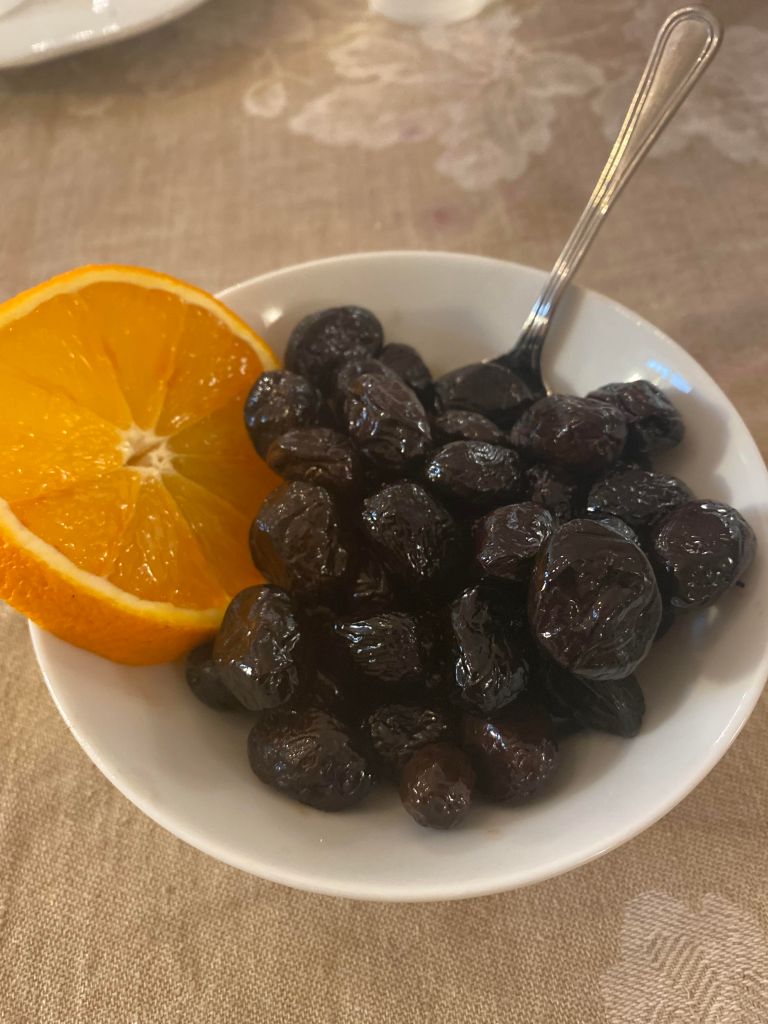
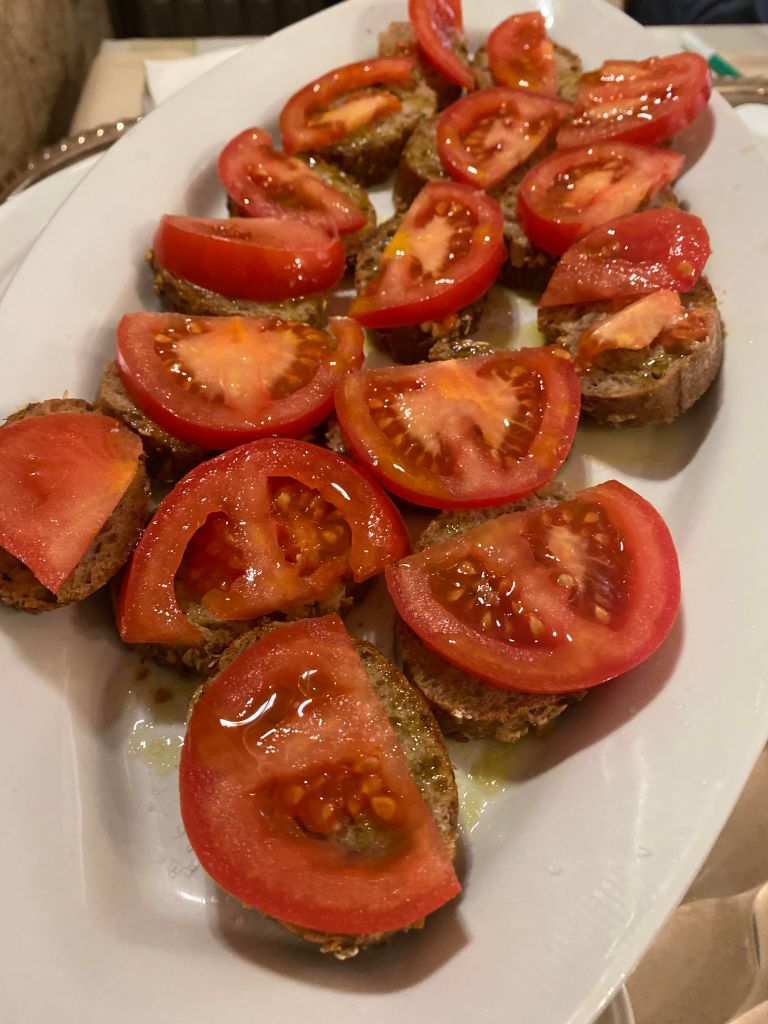
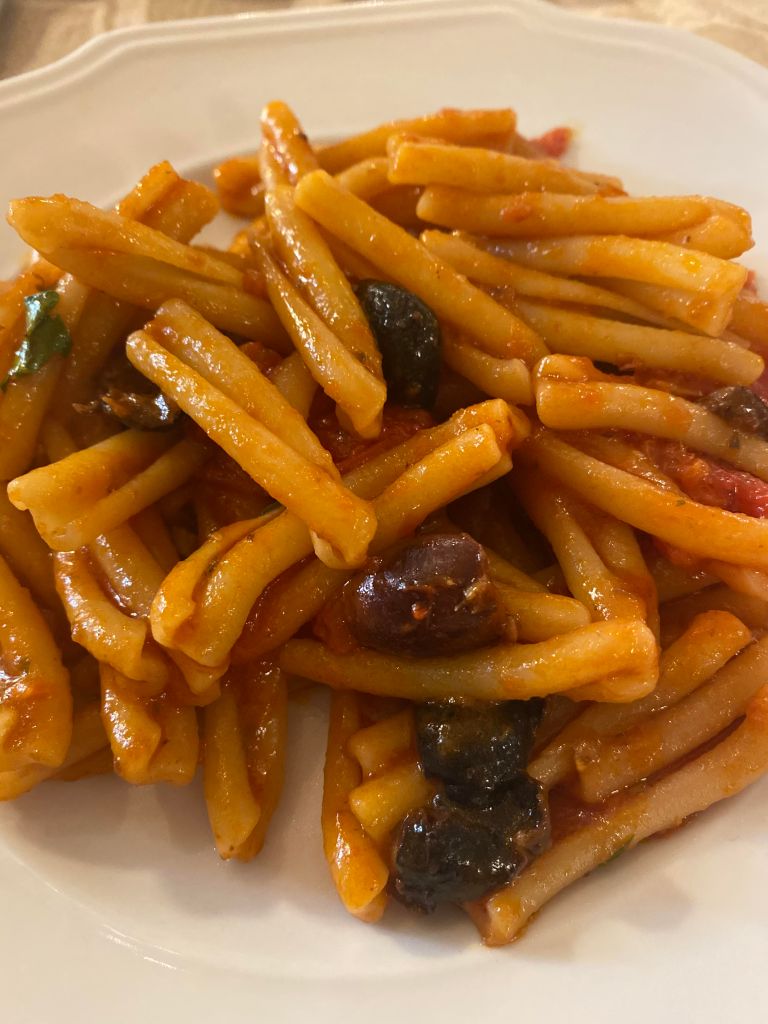
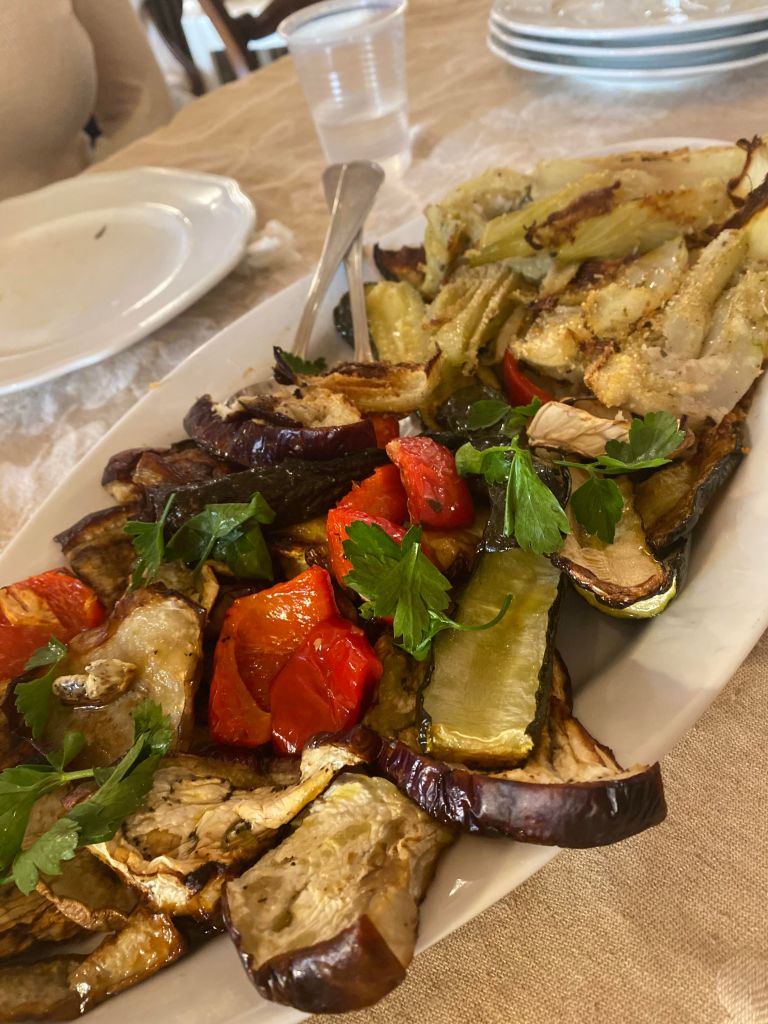
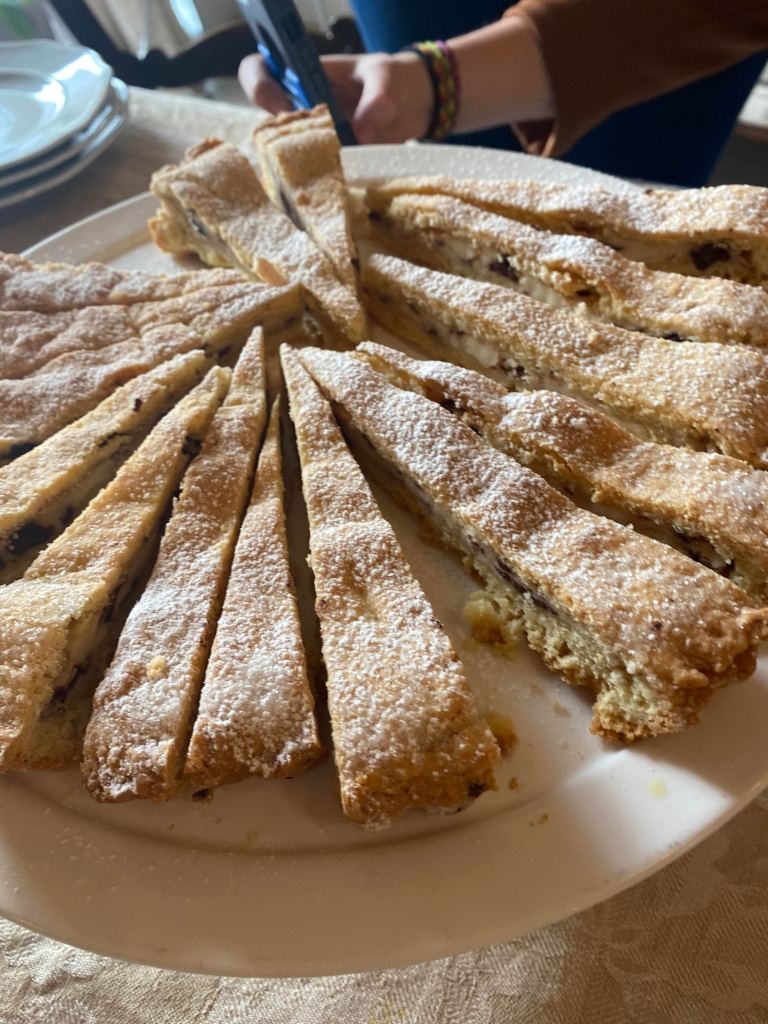
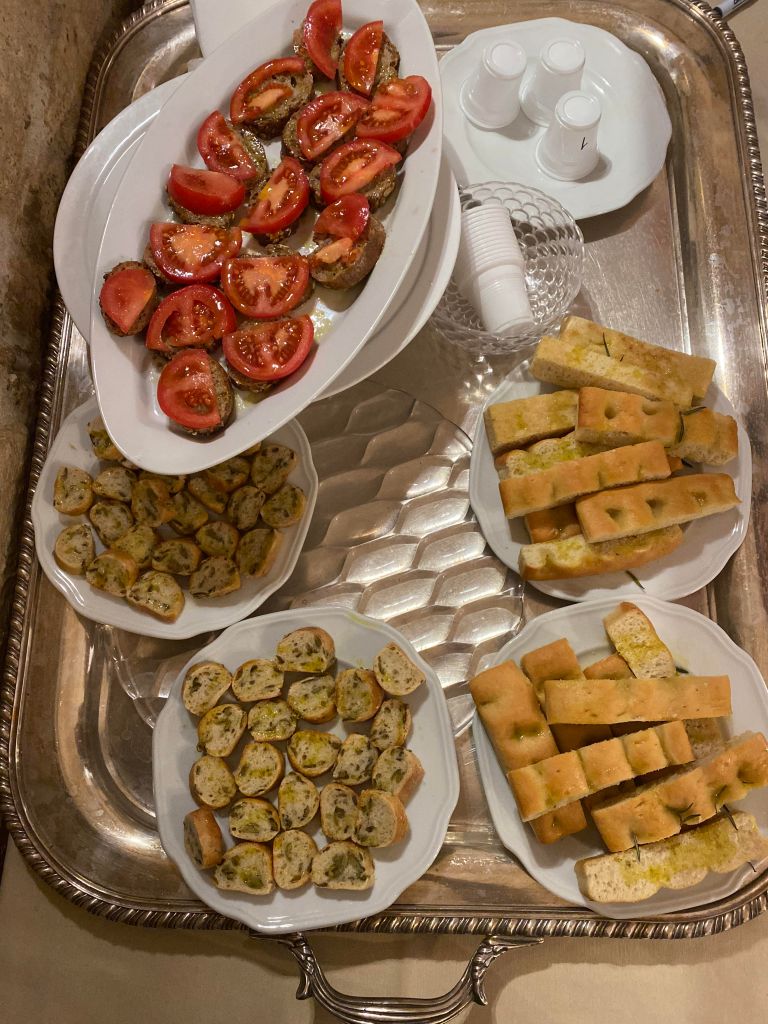
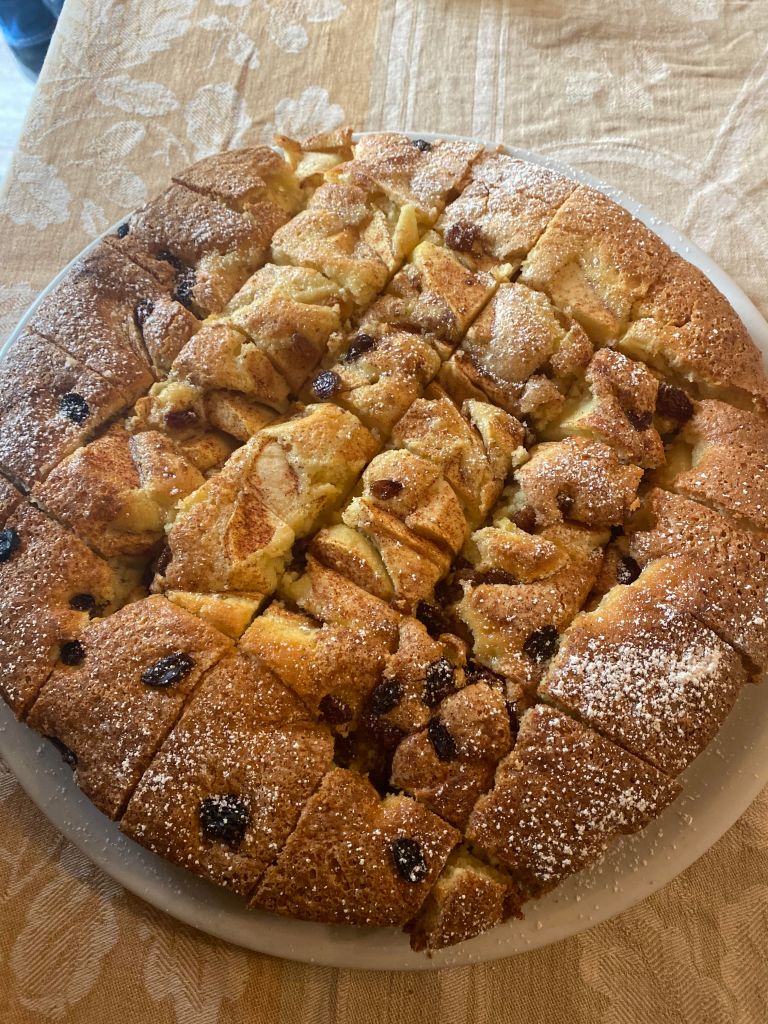
After the sampling of the oils we were treated to snacks that had been prepared with the two more expensive oils, and then we were given lunch that had the main pasta dish consisting of olives. Overall, this was a really interesting experience as we were able to learn a lot more about not only the production of olive oil but how to tell the difference between good and bad olive oil. Prior to this trip I completely despised olives, but after the sampling this day between the olives and the oils I can say I despise them a little less.
 Cooking Court